
Mindfulness and Patience: Slowing Down in a Hurry-Up World
Delays, queues and slow replies test our patience daily. Here is how mindfulness can help us wait, and live, a little more calmly.

Category
Date
Read time
Mindfulness and Patience: Slowing Down in a Hurry-Up World

Mindfulness and patience go hand in hand, because patience is really attention under pressure. It is the ability to stay steady when something is slow, frustrating or out of our control: a queue that is not moving, a child who will not put on their shoes, a reply that has not arrived. According to Mindful.org, patient people tend to report less depression and negative emotion, more gratitude and fewer health complaints.
What impatience is really telling us
Impatience is rarely about the delay itself. It is the gap between how fast we want things to move and how fast they are actually moving, and we feel that gap in the body: tight shoulders, a clenched jaw, shallow breathing.
Seeing it this way is useful, because the gap can be worked with. We cannot always speed up the world, but we can change how we hold the waiting.
Three kinds of patience
Mindful.org describes research that distinguishes three types: patience with other people, patience while waiting out a hardship, and patience with everyday hassles. Most of us are stronger in one than in the others. Someone who copes well with a long illness may still find a slow lift unbearable, and the reverse is also common.
Naming which kind is being tested can take some of the heat out of the moment, and it shows where practice is most needed.
Practicing patience in small doses
The good news is that everyday life supplies endless opportunities. A few ways to use them:
• Feel the impatience first. Before reacting, notice where it sits in your body, and soften that area on a slow out-breath.
• Treat a delay as a free pause. The queue, the red light and the loading screen are short invitations to take three deep breaths.
• Walk a little slower on purpose. Our guide to mindful walking offers a gentle way to loosen the habit of rushing.
The same article notes that a short patience training study with 71 students improved both patience and mood. It was a small, early study, so it should be read cautiously, but it supports the idea that patience can be developed rather than being a fixed trait.
Patience with ourselves
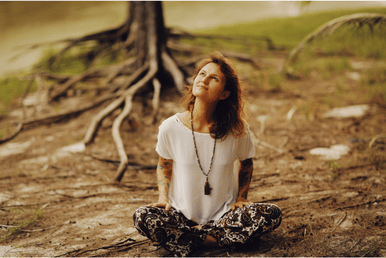
Many of us are far more patient with others than with ourselves. Learning something new, recovering from a setback or changing a habit all take longer than we would like. Our post on emotional regulation through mindfulness shows how to meet frustration, including frustration with ourselves, with a little more room and a little less judgement.
Starting small
If you are new to the practice, our guide to mindfulness for beginners is a good place to begin. Patience grows the way most skills do, through repeated, unglamorous practice.
A closing thought
Hurrying rarely makes the day better. Pausing, breathing and letting a slow moment be slow can leave you steadier for whatever comes next.
Suggested Course
Patience deepens with sustained, guided practice. Our 12-Month Online Diploma in Teaching Mindfulness and Positive Psychology offers a thorough, supported path for those who want to build a lasting personal practice and, if they wish, learn to teach it.
If you would like to know more about our mindfulness courses, call us on +353 1 637 3934 or email info@irishmindfulnessacademy.ie.