
Mindfulness and Gratitude: Noticing What Is Already Here
Gratitude is not about forcing positivity. It is about noticing what is already here. Here is how to practice it mindfully.

Category
Date
Read time
Mindfulness and Gratitude: Noticing What Is Already Here
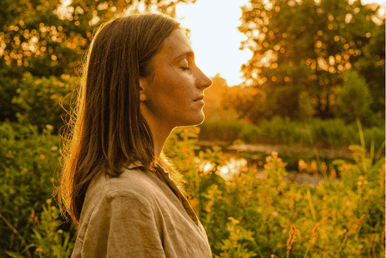
Mindfulness and gratitude share a quiet connection: both begin with noticing. Mindfulness asks us to pay attention to the present moment, and gratitude is what often appears when we do, a warm cup of tea, a friend who rang, the fact that the lights came on this morning. According to Harvard Health, gratitude is consistently associated with greater happiness in positive psychology research, as well as with better coping in difficult times and stronger relationships.
Why gratitude needs practice
Our minds are tuned to spot problems. That habit once kept us safe, but it also means that what is going well tends to slip by unnoticed while what is going wrong holds our attention for hours.
Gratitude does not deny difficulty, and it is not the same as telling yourself to be positive. It is a deliberate widening of attention, so that the good things sitting beside the problems are allowed into view as well.
What the research suggests
The Harvard Health article describes a well-known study in which participants wrote weekly about things they were grateful for, while others wrote about daily irritations. Over the following weeks, the gratitude group reported more optimism, felt better about their lives, and reported exercising more and having fewer visits to the doctor. Another study found that writing and delivering a gratitude letter produced a large rise in happiness scores that lasted about a month.
The article is also candid about limits. Not every group benefited in every study, and much of the research shows association rather than proof of cause and effect. It is a gentle, low-risk practice worth trying, not a cure.
Three ways to practice mindfully
• Pause at three small things. Once a day, stop and notice three ordinary things you are glad of, and let yourself feel them for a few breaths rather than just listing them.
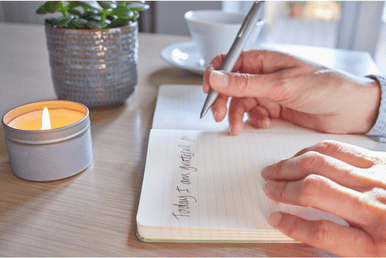
• Write it down once a week. A short weekly note tends to stay fresh, whereas a daily list can start to feel like a chore.
• Say it to someone. A short thank-you message, or a thank-you said aloud, lets the feeling land in two people instead of one.
Letting gratitude sit alongside difficulty
On harder days, gratitude can feel forced. Our guide to self-compassion is a useful companion here. You do not have to feel grateful for everything, and there is no need to argue yourself out of a hard feeling. Gratitude and sadness can share the same afternoon.
The wider picture
Our post on mindfulness and positive psychology looks at how the two fields overlap, and why attention to what is going well is a skill that grows with use, in the same way as attention to the breath.
A closing thought
Gratitude is not a mood to be summoned. It is what is left when we stop for a moment and look properly at the life, we are already in.
Suggested Course
For those drawn to the deeper questions that gratitude and presence can open up, our Beyond Mindfulness Course offers a guide to moving past technique and into a more reflective, spiritual relationship with everyday life.
If you would like to know more about our mindfulness courses, call us on +353 1 637 3934 or email info@irishmindfulnessacademy.ie.